

Article: How to Choose Interior Door Handles: Complete Guide 2026

How to Choose Interior Door Handles: Complete Guide 2026
Choosing internal door handles is often considered a secondary detail, but in reality, it has a decisive impact on both the aesthetics and functionality of spaces. A well-chosen handle enhances the door and helps define the style of the house, while a hasty choice can create disharmony even in well-furnished spaces. For this very reason, understanding how to choose door handles correctly is fundamental.

The first aspect to consider is the type of handle. The most common are those on a rose and those on a backplate. Handles on a rose have a more modern and minimal design because the lever and the lock are separate, creating a cleaner visual effect. They are perfect for contemporary environments and for those who love an essential style. Handles on a backplate, on the other hand, have a more classic and decorative appearance, with a single plate that also integrates the lock: an ideal choice for traditional or elegant homes. In addition to this, there is the distinction between handles with locks, suitable for bedrooms and bathrooms, and those without locks, more suitable for spaces such as living rooms and kitchens.

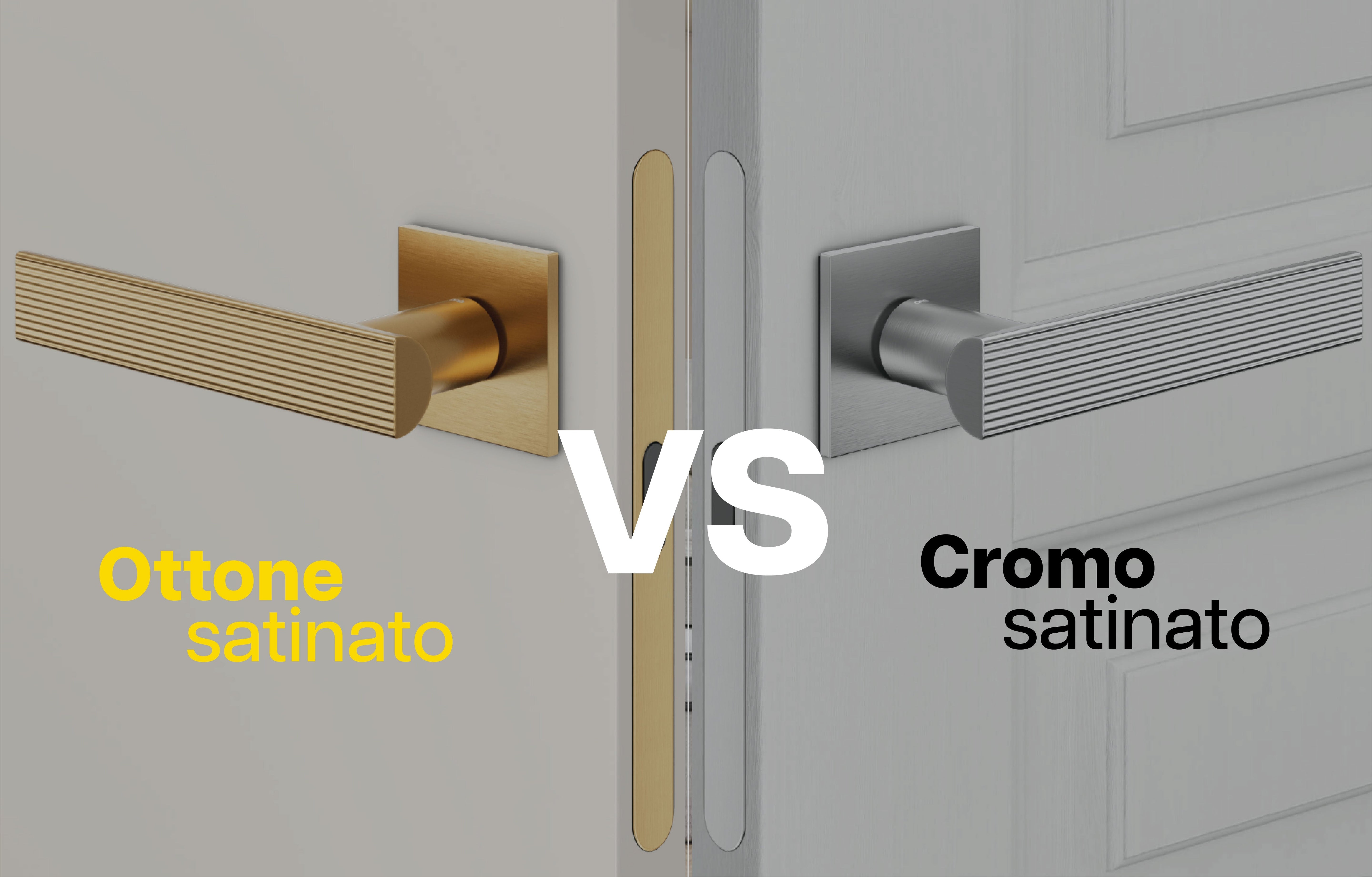
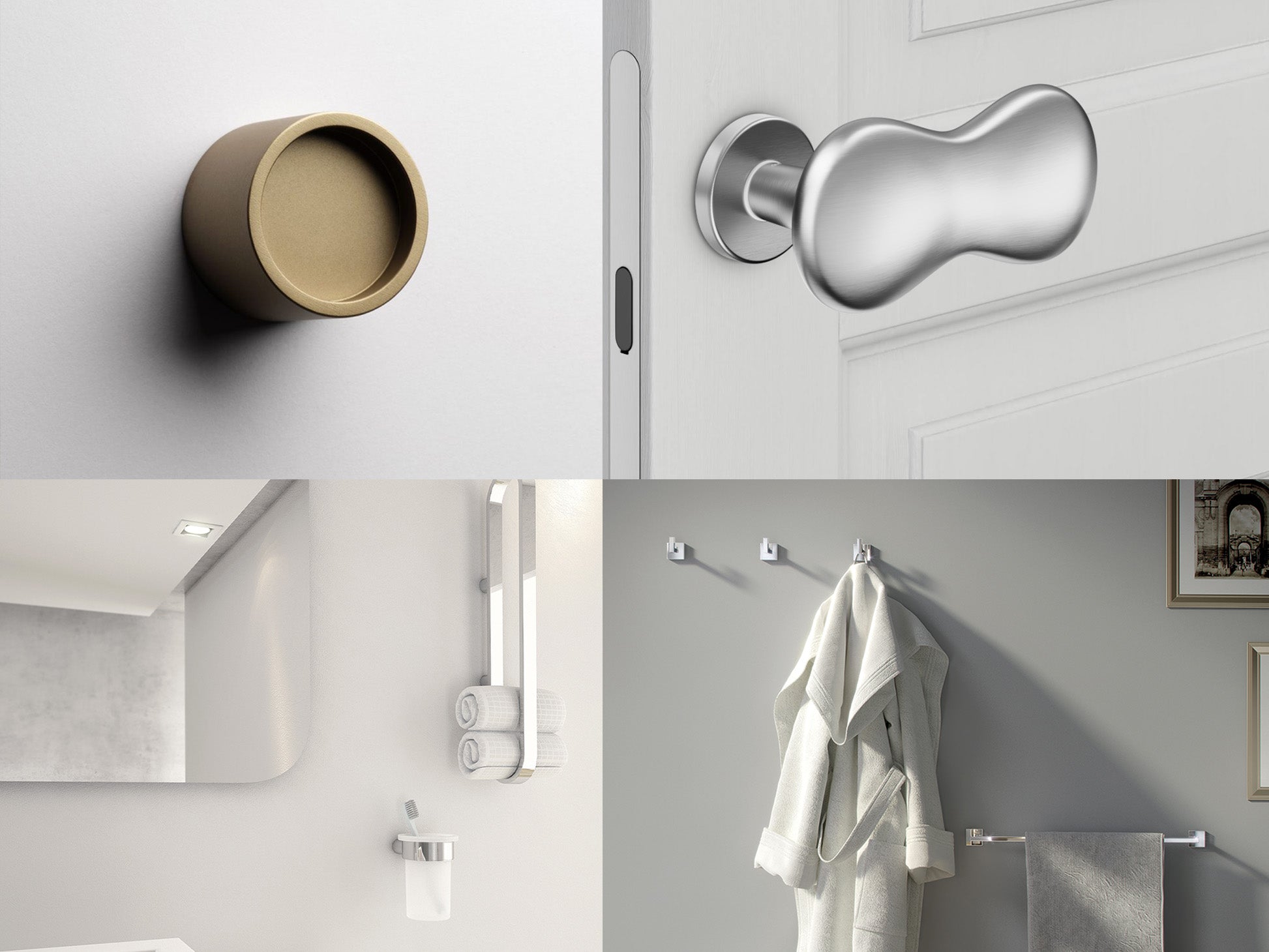
Another fundamental element in choosing internal door handles is the material. Nylon is one of the most popular options because it combines lightness, wear resistance, and ease of maintenance, as well as offering good practicality in everyday use. Brass, on the other hand, has a warmer and more elegant appeal and is often used in classic or refined contexts, although it requires a little more care over time. Aluminum represents a lightweight and economical solution, while zamak is very popular due to its excellent quality-price ratio and the wide variety of available finishes. The choice of material should not be based solely on price, but also on daily use and the context in which the handle will be placed.

The finish is what immediately catches the eye and can completely change the final effect. Satin finishes are among the most versatile because they are elegant, discreet, and able to hide fingerprints and signs of wear. Glossy versions, on the other hand, are brighter and more striking, but require more frequent maintenance. Among the latest trends, matte black stands out, increasingly used in modern environments for its strong and contemporary character. Choosing the right finish means finding the right balance between aesthetics and practicality.

Naturally, everything must be consistent with the style of the house. In a modern environment, handles with clean lines and finishes like chrome or black work best, while in a classic home, softer shapes and materials like brass are valued. In industrial settings, however, dark finishes and an essential, almost raw design are preferred. The main rule is to maintain cohesion between handles, doors, and furniture, avoiding unwanted contrasts.

In addition to aesthetics, it is important not to overlook ergonomics and comfort. A handle must be pleasant to use every day, easy to grip, and smooth in movement. This becomes even more important in the presence of children or the elderly, for whom practicality is a decisive factor.
The price can also influence the choice. There are economical solutions, but often the mid-range represents the best compromise between quality and durability. Investing a little more in a good handle means avoiding problems over time and achieving a better aesthetic result.
In conclusion, choosing internal door handles is not a detail to be underestimated. It is a decision that combines aesthetics and functionality and helps define the identity of the spaces. Taking the time to evaluate all available options allows for a harmonious, durable, and perfectly aligned result with one's living style.